Open Registry
for AI Infrastructure
Discover and compare models, providers, MCP servers, and agent skills with source-transparent pricing, context limits, capabilities, access terms, and deployment data.
Tracking providers across the ecosystem








214
Models
52
Providers
289
Provider Mappings
$4.06
Avg Paid I/O $/1M
Popular Models
Top-ranked models by relevance and provider availability
Claude Opus 5.5
Anthropic's Opus-class model for long-running agentic coding and knowledge work, succeeding Claude Opus 5 at a lower price. Particularly strong at multi-step changes in large codebases and sustained autonomous tasks, with always-on adaptive thinking steered by an effort parameter, a 1M-token context window, and up to 128K output tokens. Anthropic's recommended starting point for most workloads.
GPT-6 Astra
OpenAI's most capable frontier model for the hardest end-to-end work across complex reasoning, coding, computer use, browsing, research, scientific analysis, cybersecurity defense, and professional document creation. Supports long-context multimodal input, structured outputs, function calling, reasoning effort controls, MCP, skills, computer use, hosted shell, code interpreter, web search, file search, and apply-patch workflows through the Responses API.
GPT-6.1 Sol
OpenAI's upgrade to GPT-6 Sol, delivering near-Astra performance for complex work at a lower cost. Suited for agentic coding, computer use, and document-heavy professional work, with multimodal input, function calling, reasoning effort controls, a 1.05M-token context window, up to 128K output tokens, and cheaper cached input than GPT-6 Sol.
Gemini 4 Argon
Google's flagship reasoning model for software engineering, mathematics, science, and autonomous agents, generally available in Gemini API and Google AI Studio since October 13, 2026. Input, thinking, and output share a 1,048,576-token window, with long responses supported through background execution. Standard API pricing is $2 input and $10 output per million tokens through November 30, 2026; Google has announced $4 input and $20 output from December 1. No free API tier is available.
Nemotron 3 Ultra
NVIDIA's flagship open 550B-parameter Mixture-of-Experts model with 55B active parameters, built for frontier reasoning and orchestration in long-running agentic systems. Features hybrid Mamba-Transformer architecture, LatentMoE routing, multi-token prediction, and NVFP4 precision for 5x higher throughput. Achieves 30% lower cost-to-task-completion on agentic benchmarks. Supports 1M+ token context window with 95% accuracy on Ruler@1M.

Kimi K2.7 Code
Moonshot AI's latest open-source, coding-focused model in the Kimi K2 family, built to complete end-to-end programming tasks reliably over long contexts. A 1-trillion-parameter model that cuts reasoning token usage by roughly 30% versus K2.6 while improving coding and agent performance — +21.8% on Kimi Code Bench v2, +11.0% on Program Bench, and +31.5% on MLS Bench Lite for multi-language support. Released under a Modified MIT License and available via Kimi APIs and Hugging Face.
Gemma 4 12B
Google's medium-size open-weight model with 12 billion parameters from the Gemma 4 family. Encoder-free unified multimodal architecture that natively processes text, image, audio, and video inputs without dedicated encoders. Features a 256K context window and supports 140+ languages. First medium-sized model capable of natively ingesting audio. Suitable for local deployment on GPUs with 16GB VRAM.
DeepSeek V4 Flash
DeepSeek's efficient V4 model with 284B total parameters (13B activated). Optimized for speed and cost-efficiency while maintaining strong performance. Supports 1M token context window.

MiniMax M3
MiniMax's frontier open-weight model with 1M-token context window, native multimodality (text, image, video), and strong coding capabilities. Built on MiniMax Sparse Attention (MSA) architecture, achieving 59% on SWE-Bench Pro with significantly improved efficiency at long context.

Qwen 3.8 27B
Alibaba's open-weight 27B dense vision-language model in the Qwen 3.8 family. It builds on the Qwen 3.6 27B line with stronger coding and office productivity capabilities across text and visual modalities, supports one million tokens of context through hosted APIs, and is suited to multimodal assistants, document work, coding, and long-running agent tasks.
Granite 4.1 8B
IBM's dense decoder-only 8B parameter language model from the Granite 4.1 family. Supports 131K-token context, tool calling, RAG, code generation with fill-in-the-middle, text summarization, classification, and extraction across 12 languages. Released under Apache 2.0.
DiffusionGemma
Google DeepMind's experimental diffusion-based member of the Gemma 4 open model family. Unlike autoregressive models that generate text one token at a time, DiffusionGemma denoises a canvas of placeholder tokens to produce up to 256 tokens in parallel, finalizing output in one block. A Mixture-of-Experts model with 26B total parameters and 3.8B active per inference, delivering roughly 4x the throughput of similarly sized autoregressive Gemma models on local hardware. Excels at non-linear tasks like in-line editing, molecular sequencing, mathematical graphing, and self-correcting puzzles.
Model comparison
Start with the workload. Then choose the model.
Turn a registry of models into a decision. Filter the full catalog, compare trustworthy values side by side, and calculate cost with your own assumptions.
Compare the facts that matter
Context, modalities, capabilities, access terms, and provider availability in one view.
Keep price attached to a provider
Deployment-specific input and output prices are never presented as global model properties.
Estimate your workload cost
Use your own token volumes, cache assumptions, and request count instead of an abstract score.
Live registry snapshot
Largest documented context windows
Model-level capacity from the registry. Capacity is not quality.
Latest Insights
Analysis, benchmarks and comparisons across the LLM ecosystem
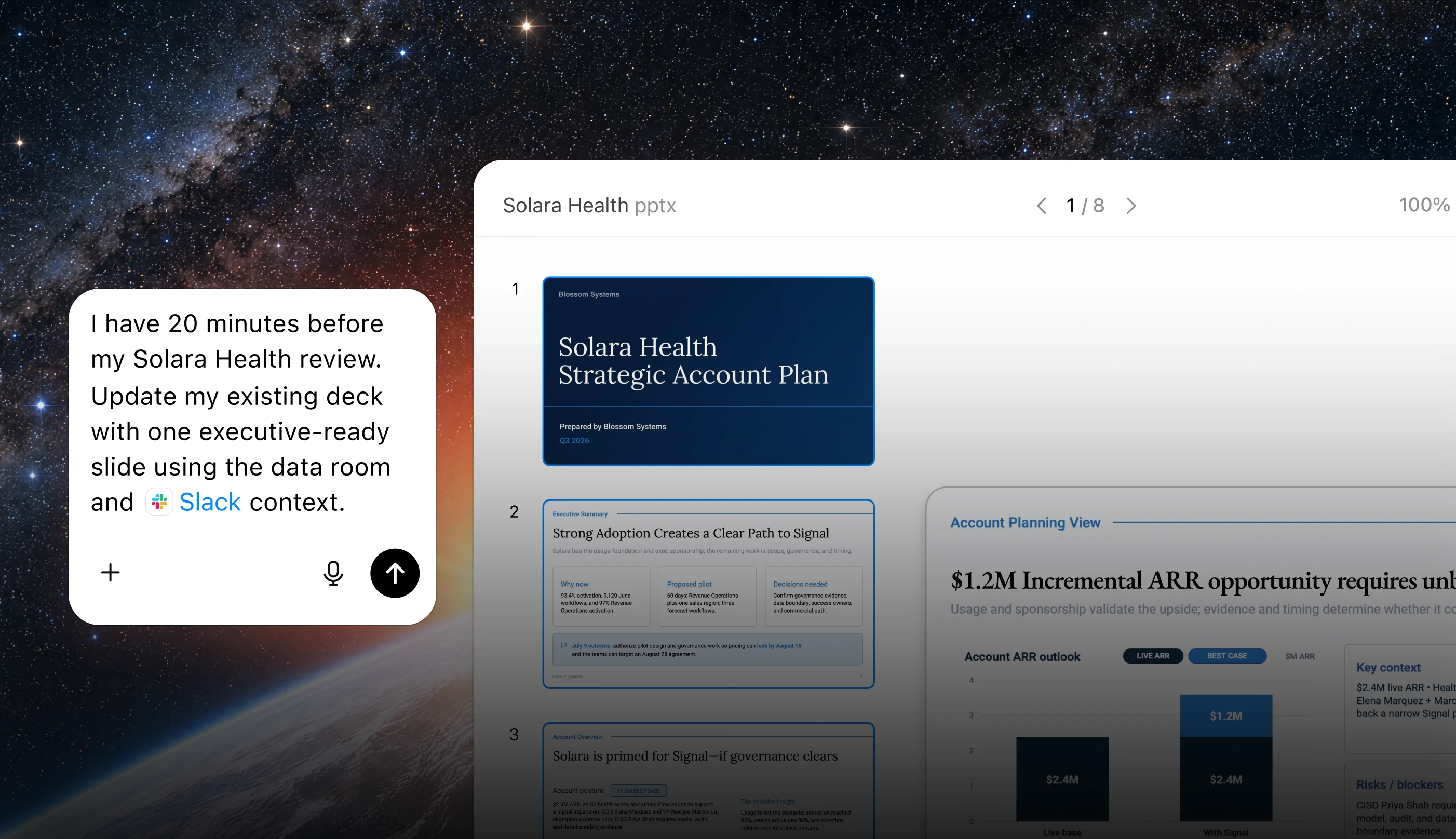
GPT-5.6 and ChatGPT Work: From AI Assistant to AI Worker
OpenAI is no longer positioning ChatGPT as a conversational assistant. With GPT-5.6 and ChatGPT Work, the company is moving toward a full work execution layer across apps, files, code, and business workflows.
The AI Race Is Shifting From IQ to Agentic Economics
The AI race is shifting from benchmark scores to agentic economics. Why inference costs, latency, and open-weight models are reshaping the industry in 2026.
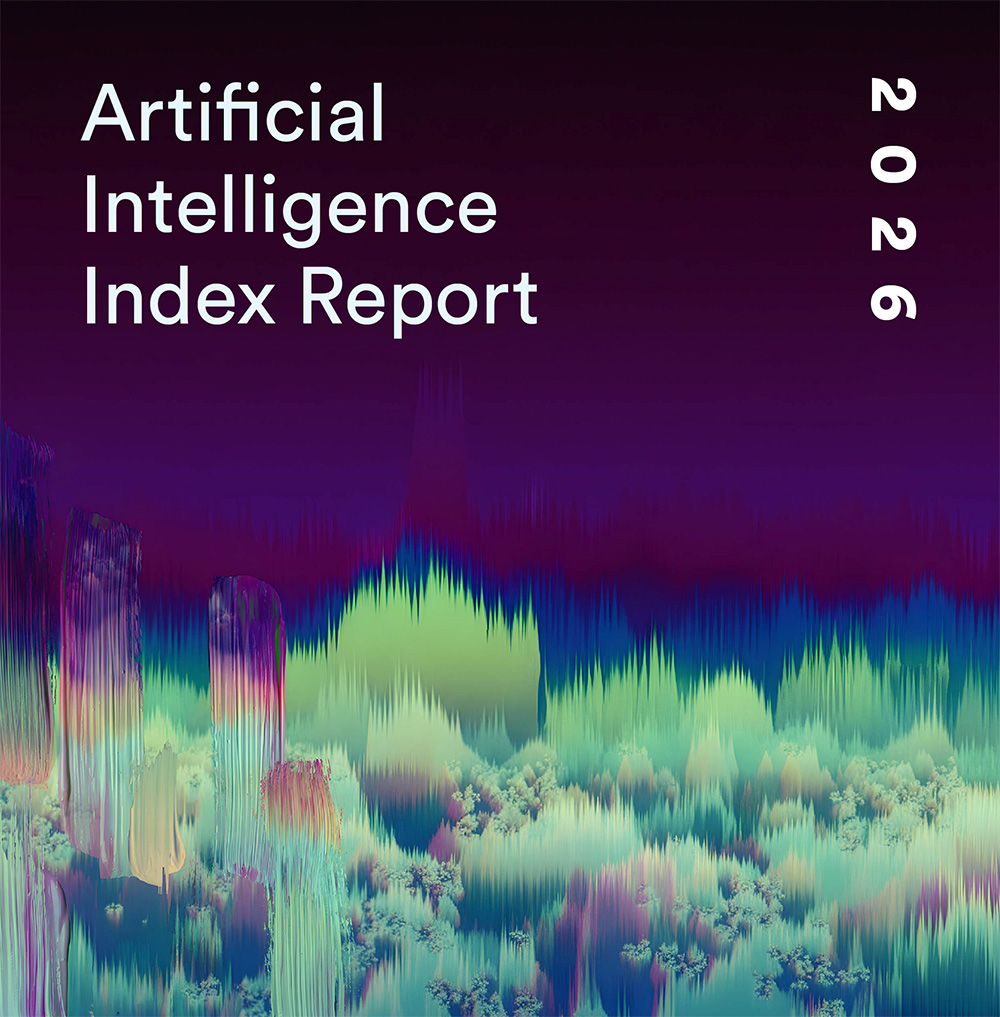
Stanford AI Index 2026: AI Is Scaling Faster Than Society Can Adapt
The release of the 2026 AI Index Report by Stanford HAI paints a very clear picture: artificial intelligence is no longer an emerging technology — it has become global infrastructure.